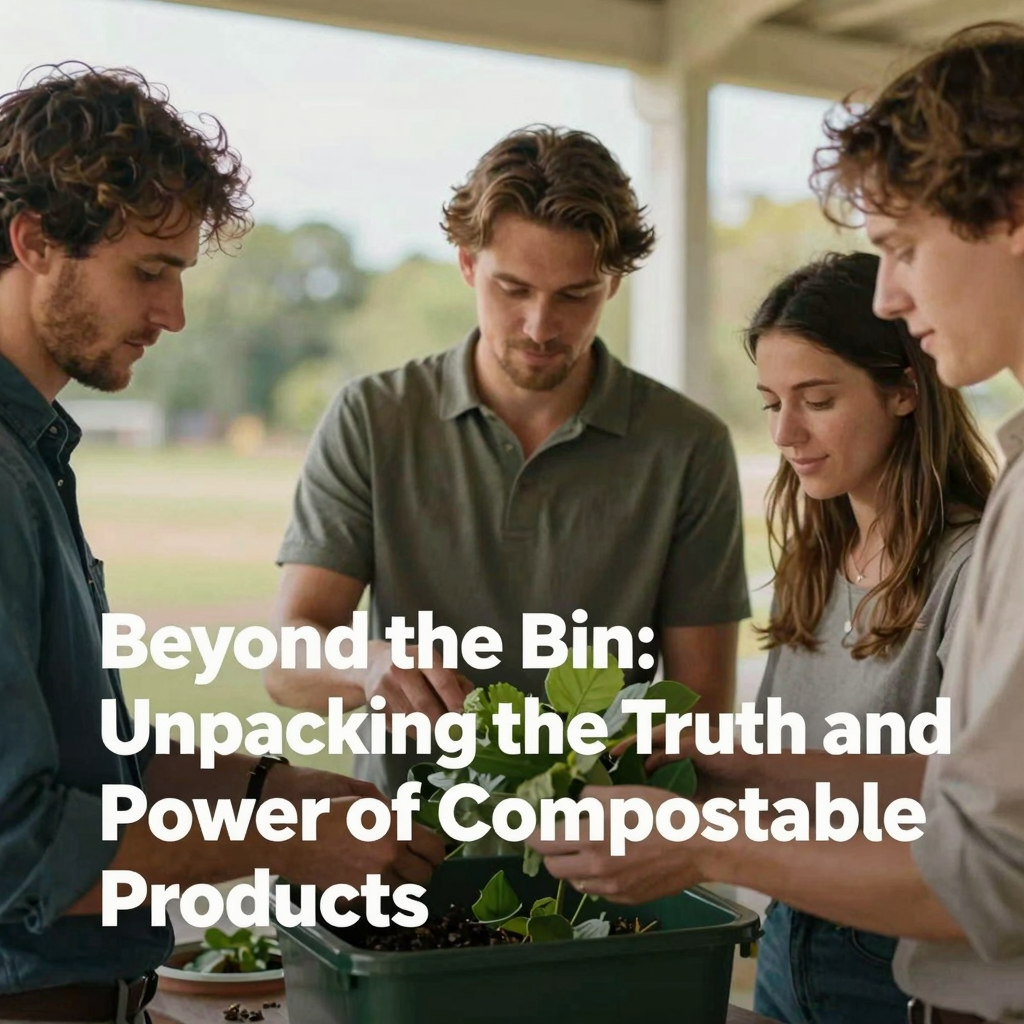
For years, the symbol of sustainability was the humble recycling arrow. Today, a new contender has emerged, promising a cleaner, greener end-of-life for our everyday products: the “compostable” label. From coffee cups and cutlery to mailers and dog poop bags, items branded as compostable are flooding the market, offering a tantalizing vision of waste simply turning back into soil. But what does “compostable” truly mean? Is it a magic bullet for our planet’s waste crisis, or is it a well-intentioned concept mired in complexity and consumer confusion? With a decade of navigating eco-conscious trends, I’ve learned that the story of compostables is one of incredible potential, but it requires us to look beyond the marketing and understand the science, systems, and responsibility behind the label.
What Does “Compostable” Actually Mean? The Science Behind the Soil
Let’s start by demystifying the term. Unlike “biodegradable”—a vague term meaning an item can break down under some conditions over an unspecified time—”compostable” is a specific, scientific claim. A compostable product is one that will completely break down into non-toxic, nutrient-rich organic matter (humus) in a compost environment within a defined timeframe. This process relies on microorganisms like bacteria and fungi that consume the material, leaving behind only carbon dioxide, water, and compost.
However, not all compost environments are created equal. This is the critical distinction every consumer must understand. There are generally two recognized pathways for compostable products to break down:
1. Industrial/Commercial Composting
This is the gold standard for most certified compostable plastics and packaging. Industrial composting facilities create controlled, high-temperature environments (typically 55-60°C or higher) that efficiently break down materials, including certified compostable plastics, within 90-180 days. These facilities manage aeration, moisture, and the carbon-to-nitrogen ratio to optimize the process and eliminate pathogens and weed seeds.
2. Home Composting
This is a lower-temperature, less controlled process happening in your backyard bin or pile. Only products specifically certified for home compostability will reliably break down in these conditions, which vary wildly by climate, season, and management. Many “compostable” items on the market are not designed for home composts and will either sit there for years or contaminate your precious soil.
The Crucial Role of Certifications: Reading Between the Lines
You cannot trust the word “compostable” on a package alone. This is where third-party certifications become your essential guide. Look for these logos, which indicate the product has met rigorous scientific testing standards:
- BPI (Biodegradable Products Institute) – USA: The most common certification in North America, indicating a product is certified compostable in industrial facilities.
- TÜV Austria (OK compost INDUSTRIAL / OK compost HOME): A leading European standard. The “HOME” label is a reliable indicator a product will break down in a backyard compost.
- AS 5810 (Home Compostable – Australia): The Australian standard for home compostability.
These certifications test for complete disintegration, lack of ecotoxicity (so the resulting compost supports plant growth), and regulated levels of heavy metals. If a product lacks a recognizable certification, its compostability claim is highly suspect. Remember, a certified compostable product thrown in a landfill is a failure of the system; it needs the right end-of-life to fulfill its promise.
The Promise vs. The Practicality: Navigating the Real-World Challenges
The theory of compostables is beautiful: a circular system where packaging feeds the earth that grows our food. The practice, however, is fraught with hurdles we must acknowledge to make it work.
The Infrastructure Gap
The single biggest challenge is the lack of widespread access to industrial composting facilities. Many municipalities do not offer “green bin” collection for compostables, and those that do often explicitly exclude all plastics and packaging—even certified ones—due to contamination risks and processing limitations. A compostable cup is worthless if the only options are landfill (where it may release methane as it breaks down without oxygen) or the recycling bin (where it is a contaminant).
Consumer Confusion & Contamination
The “compostable” label, without clear disposal instructions, leads to well-meaning mistakes. People toss non-compostable items into compost streams (wish-cycling’s greener cousin) and compostable items into recycling. Both actions are damaging. Contamination of the compost stream with conventional plastics or toxins can ruin entire batches of valuable compost, while compostables in recycling can clog and damage sorting machinery.
The Question of Resources and Prioritization
It’s also vital to ask: are we solving the right problem? The production of compostable plastics, often from corn or sugarcane, still requires agricultural land, water, and energy. The most sustainable item is the one we don’t use. Before embracing a compostable alternative, we should prioritize reduction (do I need this wrapper at all?) and reuse