
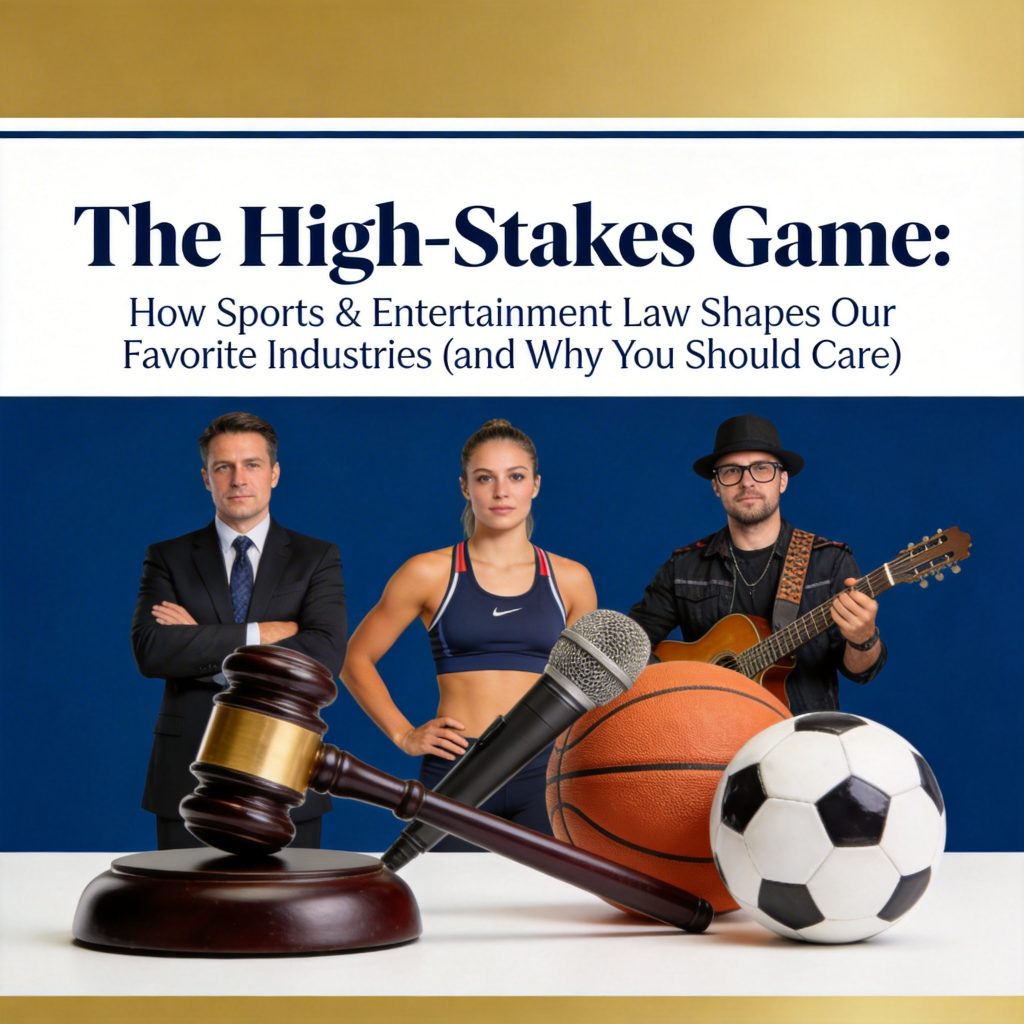
The High-Stakes Game: How Sports & Entertainment Law Shapes Our Favorite Industries (and Why You Should Care)
 admin
admin
We cheer for the game-winning shot, sing along to the chart-topping hit, and lose ourselves in the latest blockbuster. But behind every dazzling dunk, every sold-out concert, and every Oscar-worthy performance lies a complex, often invisible, web of legal frameworks. Sports & Entertainment Law isn’t just for high-priced attorneys in skyscrapers; it’s the indispensable rulebook governing the multi-billion dollar ecosystems that fuel our passions and define global culture. This specialized field operates at the thrilling intersection of intense competition, immense financial stakes, personal branding, and rapidly evolving technology, constantly redefining itself to keep pace with the industries it serves. Far from being a niche concern, understanding its contours reveals the very mechanics of how our favorite stars rise, fall, get paid, and protect their legacies, while ensuring the leagues, studios, and platforms we rely on function – sometimes harmoniously, often contentiously. It’s the silent referee, the tireless negotiator, and the vigilant guardian, shaping everything from contract negotiations worth hundreds of millions to the fair use of a meme, making it arguably one of the most dynamic and consequential areas of modern legal practice.
At its core, Sports & Entertainment Law tackles fundamental questions of rights, relationships, and regulation. In sports, this means navigating the intricate balance between individual athlete autonomy and team/collective interests, heavily influenced by labor law. Collective Bargaining Agreements (CBAs) – negotiated between league owners and player unions – are the bedrock documents dictating salary caps, free agency rules, revenue sharing, drug testing policies, and even protocols for handling issues like domestic violence or mental health. Think of the NFL’s CBA, a colossal document spanning hundreds of pages, which directly impacts whether a star quarterback gets franchise-tagged, how rookie salaries are structured, and how disciplinary actions are handled. Similarly, antitrust considerations loom large; leagues often seek exemptions (like the NFL’s limited antitrust shield under the Sherman Act) to maintain competitive balance through mechanisms like drafts and salary caps, while players argue these same structures suppress their market value. On the entertainment side, the focus shifts dramatically towards intellectual property (IP). Copyright law protects the creative expression – the script, the musical composition, the film footage, the video game code. Trademark law safeguards brand identities: the logo on your favorite jersey, the name of the band, the distinctive sound of a studio’s opening sequence. Licensing becomes paramount; a studio doesn’t just sell a movie, it licenses merchandising rights, streaming rights, foreign distribution rights, and spin-off potential. Contract law, however, remains the universal language. Whether it’s structuring a complex endorsement deal for a tennis star that includes equity in a startup, negotiating the “360” deal covering an artist’s recording, touring, merchandise, and brand partnerships, or drafting the intricate clauses governing an actor’s participation in a superhero franchise across multiple films and platforms, the lawyer’s pen is mightier than the sword (or the microphone, or the football).
The landscape is perpetually transformed by technological disruption and shifting cultural norms, demanding constant legal adaptation. Digital piracy was once the existential threat; today, the battleground is over streaming rights, digital licensing models, and the valuation of content in an era of fragmented audiences. Social media has revolutionized athlete and celebrity branding, turning personal lives into monetizable assets, but also creating minefields of defamation, right-of-publicity claims, and contractual conflicts when influencers promote competing products. Consider the explosive growth of esports: lawyers are now grappling with unique issues like standardizing player contracts for minors, defining the status of pro gamers as employees or independent contractors, protecting streamer IP in live broadcasts, and navigating international jurisdiction as teams and tournaments span continents. Simultaneously, society’s evolving expectations demand new legal responses. Movements like #MeToo forced the entertainment industry to confront systemic harassment, leading to revised arbitration clauses, stronger non-disclosure agreement (NDA) regulations, and renewed scrutiny of power dynamics within unions and agencies. In sports, increased awareness of concussion risks spurred massive litigation against leagues (like the NFL’s landmark concussion settlement), driving changes in safety protocols and insurance structures. The push for greater athlete activism, seen in figures like Colin Kaepernick, tests the boundaries of employment law, league conduct policies, and the tension between personal expression and commercial sponsorship. Furthermore, the globalization of both industries creates a constant need for expertise in cross-border transactions, tax implications, international broadcasting rights, and harmonizing disparate legal systems – from EU data privacy laws (GDPR) affecting fan data collection to varying approaches to gambling legalization impacting sports betting partnerships.
Looking ahead, the pressure points promise even more complexity. The relentless march of artificial intelligence (AI) presents profound challenges: Can AI-generated performances be copyrighted? How do you fairly compensate human creators whose work trains AI models? Will deepfakes erode personality rights? Blockchain technology, while offering potential for secure ticketing and NFT-based collectibles, introduces regulatory uncertainty and risks of fraud. The ongoing debate over college athletes’ Name, Image, and Likeness (NIL) rights, while a US-specific development, signals a global trend towards greater athlete empowerment and commercialization, forcing amateur sports bodies worldwide to re-evaluate their amateurism doctrines. As platforms like Netflix and Spotify become dominant content distributors, traditional studio and label contracts are being rewritten, altering revenue streams and creative control. Environmental, Social, and Governance (ESG) factors are increasingly influencing major deals, with investors and fans demanding accountability on issues ranging from sustainability efforts at stadiums to ethical sourcing in production. Success in this arena no longer belongs solely to those who master the existing playbook; it requires foresight, adaptability, and a deep understanding of how legal strategies intertwine with technological innovation, cultural currents, and the ever-present drive for profit and legacy.
In conclusion, Sports & Entertainment Law is far more than a supporting act; it is the foundational infrastructure upon which the entire spectacle is built. It resolves the clashes between individual ambition and collective enterprise, translates fleeting fame into lasting value, and navigates the treacherous waters of public perception and private interest. From the boardroom negotiating a billion-dollar media rights deal to the agent fine-tuning an athlete’s social media policy, from the lawyer defending a singer’s sampling rights to the regulator setting standards for safe fan experiences, this field is in constant, vibrant motion. It reflects our societal values, grapples with the consequences of our technological advances, and ultimately determines who wins, who gets paid, and how the games we love continue to be played – both on the field and off. For anyone truly invested in understanding the machinery behind the magic, delving into the world of Sports & Entertainment Law isn’t just enlightening; it’s essential to appreciating the high-stakes game that shapes our culture. The next time you witness a breathtaking moment, remember: there’s a whole legal team working just as hard off-stage to make sure the show goes on, and everyone gets their fair share of the spotlight.
