
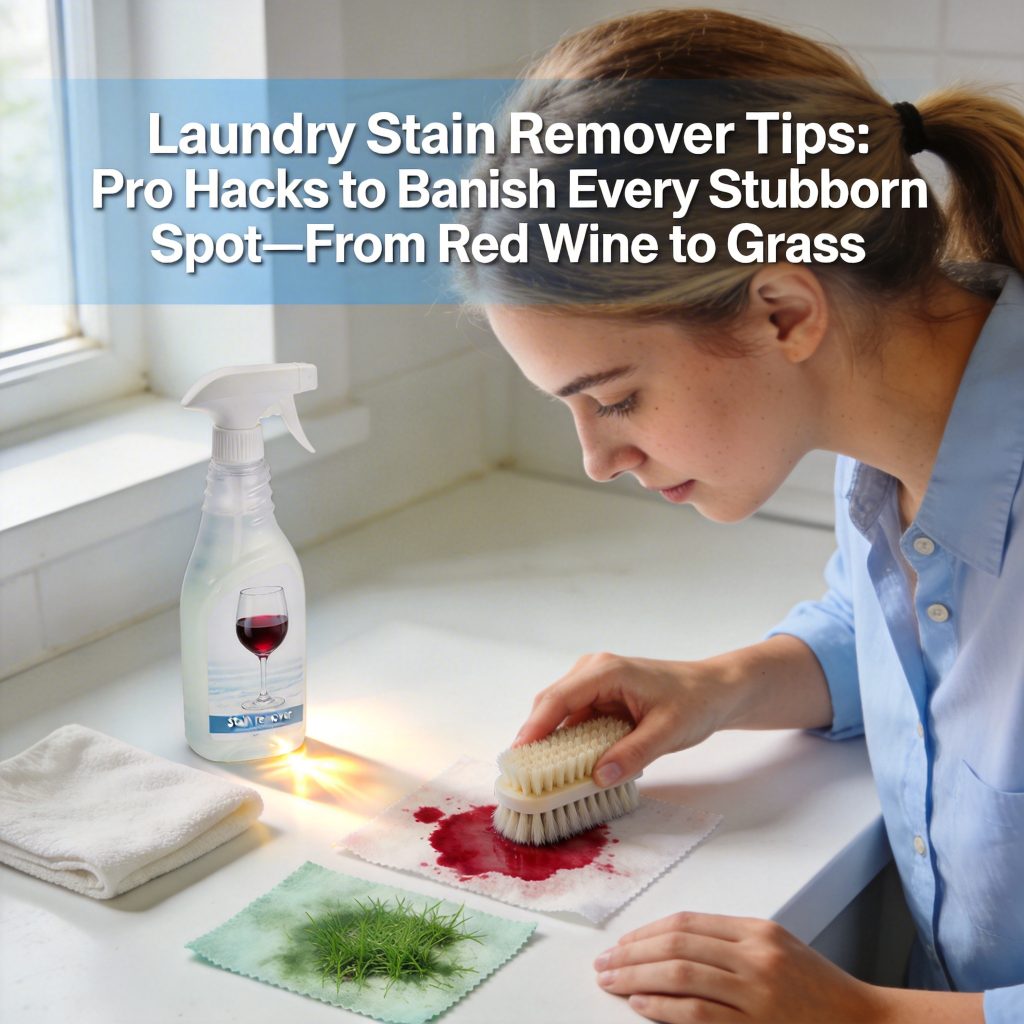
Laundry Stain Remover Tips: Pro Hacks to Banish Every Stubborn Spot—From Red Wine to Grass
 admin
admin
We’ve all been there: you’re rushing out the door for a job interview, a first date, or a family gathering, and suddenly—splat—red wine spills on your crisp white shirt, or your kid runs in covered in grass stains after playing in the yard. The panic sets in: is this garment ruined forever? After 10 years of writing about home care and testing dozens of stain removal methods (some successful, some disastrous), I can tell you with confidence: no spot is too stubborn if you know the right laundry stain remover tips.
In this guide, I’m sharing the pro hacks I’ve curated over the years—from natural remedies that use pantry staples to advanced treatments for set-in stains. Whether you’re dealing with a fresh spill or a stain that’s been hiding in the back of your closet for months, these tips will help you banish every spot without resorting to harsh, toxic chemicals. Let’s dive in.
Pre-Treatment Basics: The Foundation of Successful Stain Removal
Act Fast—Time Is Your Enemy
When it comes to stain removal, speed is everything. Fresh stains are far easier to remove than set-in ones because the pigment hasn’t had time to penetrate deep into the fabric fibers. For example, a drop of coffee wiped up within 5 minutes will likely come out with a simple rinse, but the same drop left overnight may require a full pre-treatment and soak.
For protein-based stains like blood or egg, even more urgency is needed. These stains can start to set within minutes, especially if exposed to heat. If you can’t treat the stain immediately, at least rinse it with cold water to dilute the pigment until you can give it proper attention.
Blot, Don’t Rub (The #1 Mistake Everyone Makes)
When you see a stain, your first instinct might be to rub it vigorously with a cloth—but this is the worst thing you can do. Rubbing pushes the stain deeper into the fabric fibers, making it nearly impossible to remove completely. It can also damage delicate fabrics, leaving fuzz or even holes.
Instead, grab a clean white paper towel or microfiber cloth and blot the stain gently. Press down firmly to absorb the liquid, then lift the cloth and repeat with a fresh area until no more color transfers. For solid stains (like food crumbs), scrape off any excess with a dull knife or spoon before blotting.
Test First to Avoid Disasters
Before applying any stain remover—whether it’s a commercial product or a natural remedy—it’s critical to test it on an inconspicuous part of the garment. This could be the inside seam, the hem, or a hidden area of the fabric.
To test, apply a small amount of the solution to the test area, let it sit for 5 to 10 minutes, then rinse and dry. Check for any fading, discoloration, or damage. If the fabric looks unchanged, it’s safe to use the remover on the stain. This step is especially important for colored fabrics, delicate materials like silk or wool, and vintage clothing.
Essential Pre-Treatment Supplies Every Home Should Have
You don’t need a fancy laundry room full of expensive products to remove stains effectively. Here are the basic supplies I recommend keeping on hand:
- White paper towels or microfiber cloths (avoid colored cloths, which can bleed dye onto the stain)
- Mild dish soap (like Dawn Original—its grease-cutting properties work wonders on a variety of stains)
- Baking soda (a versatile natural cleaner that absorbs moisture and lifts pigments)
- White vinegar (acidic, perfect for breaking down alkaline stains like coffee or tea)
- 3% hydrogen peroxide (gentle bleach alternative for white and light-colored fabrics)
- Enzyme-based stain remover (like OxiClean or Zout—great for protein stains like blood or grass)
- Soft-bristled toothbrush (ideal for scrubbing gentle fabric fibers without damage)
- Spray bottle (for mixing and applying homemade stain solutions evenly)
Stain-by-Stain: Your Ultimate Guide to Common Culprits
Every stain is different, and what works for red wine won’t necessarily work for grass. Below are my go-to laundry stain remover tips for the most common stubborn spots:
Red Wine
Red wine stains are the bane of every dinner party guest’s existence. But with the right method, you can banish them completely—even from white fabrics.
For fresh red wine stains: Grab a bottle of club soda and pour it directly onto the stain. The carbonation will lift the pigment from the fabric fibers. Blot the area with a paper towel until the stain fades, then wash the garment as usual. If you don’t have club soda, mix 1 part white vinegar with 2 parts water, apply to the stain, and blot.
For set-in red wine stains: Make a paste of baking soda and water, spread it over the stain, and let it sit for at least 30 minutes (or overnight for extra stubborn spots). Brush off the paste, then apply a small amount of dish soap and gently scrub with a toothbrush. Rinse and wash as usual. For white fabrics, you can also add a splash of hydrogen peroxide to the paste for extra lifting power.
Grass Stains
Grass stains are a common problem for kids, pet owners, and anyone who spends time outdoors. The chlorophyll in grass is tough to break down, but these tips will make quick work of it.
Fresh grass stains: Mix equal parts white vinegar and cold water in a spray bottle. Spray the solution onto the stain, let it sit for 15 minutes, then gently scrub with a toothbrush. Rinse the area with cold water and wash the garment as usual. The vinegar’s acidity breaks down the chlorophyll.
Set-in grass stains: Soak the garment in a mixture of warm water, 1 tablespoon of dish soap, and 1 tablespoon of hydrogen peroxide for 1 to 2 hours. Scrub the stain gently with a toothbrush, then wash the garment on a warm cycle. Note: Hydrogen peroxide can bleach colored fabrics, so be sure to test it first!
Grease and Oil Stains
Whether it’s a splash of salad dressing, a spot of motor oil, or a grease mark from cooking, these stains are tricky because they repel water. But don’t reach for harsh chemical cleaners—baking soda is your best friend here.
Fresh grease stains: Sprinkle a generous amount of baking soda directly onto the stain. Let it sit for 15 to 30 minutes (the baking soda will absorb the oil). Brush off the baking soda with a soft brush, then apply a small amount of dish soap and gently scrub the area. Rinse with warm water and wash as usual.
Set-in grease stains: Lay the garment on a flat surface and place a piece of paper towel under the stain. Apply a small amount of dish soap to the stain and let it sit for 10 minutes. Gently scrub with a toothbrush, then place another paper towel on top and press down with a warm iron (don’t use steam). The heat will help the paper towel absorb the remaining grease. Repeat until the stain is gone, then wash as usual.
Coffee or Tea Stains
Coffee and tea stains are inevitable if you’re a daily drinker. The good news is that they’re usually easy to remove if you act fast.
Fresh coffee/tea stains: Rinse the stain with cold water from the back of the fabric (this pushes the stain out instead of further into the fibers). Blot the area with a paper towel, then apply a small amount of dish soap and gently scrub. Rinse and wash as usual.
Set-in coffee/tea stains: Soak the garment in a mixture of 1 part white vinegar and 2 parts water for 30 minutes. Blot the stain with a paper towel, then wash the garment on a warm cycle with your usual laundry detergent. For white fabrics, you can also add ½ cup of baking soda to the wash cycle for extra cleaning power.
Blood Stains
Blood stains are protein-based, which means heat will set them permanently. So it’s important to use cold water for all steps.
Fresh blood stains: Rinse the stain with cold water immediately. Blot the area with a paper towel, then apply a small amount of enzyme-based stain remover (like Zout) and let it sit for 10 minutes. Wash the garment on a cold cycle with your usual detergent.
Set-in blood stains: Soak the garment in a mixture of cold water and enzyme-based stain remover for 4 to 6 hours (or overnight). Scrub the stain gently with a toothbrush, then wash on a cold cycle. If the stain is still there, repeat the process. Avoid using hot water or hydrogen peroxide on old blood stains, as this can make them harder to remove.
Natural Stain Removers: Ditch the Harsh Chemicals
Many commercial stain removers contain harsh chemicals like bleach, ammonia, or phosphates that can irritate skin, damage fabrics, and harm the environment. The good news is that you can remove most stains using natural ingredients you already have in your pantry. Here are my top natural laundry stain remover tips:
Baking Soda: The All-Purpose Workhorse
Baking soda is one of the most versatile cleaning products you can own. It’s gentle on fabrics, non-toxic, and effective at absorbing moisture and lifting pigments.
Uses for baking soda:
- Absorb grease and oil stains (sprinkle on, let sit, brush off)
- Lift red wine, tomato sauce, and coffee stains (make a paste with water)
- Neutralize odors (add ½ cup to the wash cycle for smelly clothes)
- Remove underarm stains (mix with hydrogen peroxide and a drop of dish soap for white fabrics)
White Vinegar: Acid for Tough Alkaline Stains
White vinegar is acidic, which makes it perfect for breaking down alkaline stains like coffee, tea, grass, and urine. It’s also great for removing soap residue from fabrics.
Uses for white vinegar:
- Treat grass stains (mix with water, spray, scrub)
- Remove coffee and tea stains (soak in vinegar solution)
- Neutralize pet urine odors and stains (spray undiluted vinegar on the spot, blot)
- Softens fabrics without fabric softener (add ½ cup to the rinse cycle)
Lemon Juice + Sunlight: Nature’s Bleach
Lemon juice is a natural bleach that’s gentle on white fabrics. When combined with sunlight, it becomes even more effective at lifting stains.
Uses for lemon juice:
- Remove underarm stains (squeeze fresh lemon juice onto the stain, let it sit in the sun for 1 to 2 hours, then rinse)
- Brighten white fabrics (soak in a mixture of lemon juice and water for 30 minutes, then hang in the sun to dry)
- Treat rust stains (apply lemon juice and let it sit, then scrub with a toothbrush—note: this works best on white fabrics)
Hydrogen Peroxide: Gentle Yet Effective
3% hydrogen peroxide (the kind you find in the first-aid aisle) is a gentle bleach alternative that’s great for white and light-colored fabrics. It’s effective at breaking down protein-based stains like blood, grass, and underarm marks.
Uses for hydrogen peroxide:
- Remove blood stains (soak the garment in a mixture of peroxide and cold water)
- Lift grass stains (mix with dish soap and soak)
- Brighten white fabrics (add ½ cup to the wash cycle)
- Treat set-in red wine stains (mix with baking soda to make a paste)
Note: Always test hydrogen peroxide on colored fabrics first, as it can cause fading.
Advanced Tips for Stubborn, Set-In Stains
Some stains are more stubborn than others—like old ink marks, rust, or stains on delicate fabrics. These advanced tips will help you tackle even the toughest spots:
How to Treat Stains on Delicate Fabrics (Silk, Wool, Lace)
Delicate fabrics require extra care to avoid damage. Harsh scrubbing or harsh chemicals can tear fibers or fade colors. Here’s how to treat stains on silk, wool, and lace:
- Silk: Blot the stain with a damp microfiber cloth. Mix 1 teaspoon of mild dish soap with 1 cup of cold water, apply to the stain with a cotton swab, and blot gently. Rinse with cold water and lay flat to dry.
- Wool: Blot the stain with a paper towel. Mix 1 teaspoon of mild wool detergent with 1 cup of cold water, apply to the stain, and blot gently. Rinse with cold water and lay flat to dry (avoid hanging wool, which can stretch).
- Lace: Blot the stain with a damp cloth. Mix 1 teaspoon of white vinegar with 1 cup of cold water, apply to the stain with a cotton swab, and blot gently. Rinse with cold water and lay flat to dry.
Dealing with Old Stains That Won’t Budge
Old stains that have been through the dryer are tough, but not impossible to remove. Here’s my method for set-in stains:
1. Soak the garment in a mixture of warm water, 1 tablespoon of enzyme-based stain remover, and 1 tablespoon of dish soap for 4 to 6 hours (or overnight).
2. Scrub the stain gently with a toothbrush to loosen the pigment.
3. Wash the garment on a warm cycle with your usual laundry detergent.
4. If the stain is still visible, repeat the process. Avoid putting the garment in the dryer until the stain is completely gone—heat will set it permanently.
Post-Treatment: Ensure the Stain Is Gone for Good
Even if you treat the stain perfectly, there’s one final step that’s critical to ensuring it doesn’t come back: checking before drying.
Check Before Drying (Heat Sets Stains Permanently)
The dryer’s heat is the enemy of stain removal. If you put a garment in the dryer while the stain is still visible, the heat will set the pigment permanently—making it nearly impossible to remove. Always check the stain after washing and before drying. If it’s still there, re-treat it and wash again.
How to Remove Residue from Stain Removers
Sometimes, stain removers can leave a residue on the fabric that looks like a new stain. To fix this, rinse the area thoroughly with cold water. If the residue is still there, wash the garment with a mild detergent and a splash of white vinegar to break down the residue.
When to Call in the Professionals
If you’ve tried all these laundry stain remover tips and the stain is still there, or if the garment is valuable (like a wedding dress, vintage clothing, or expensive designer piece), it’s time to call in a professional dry cleaner. Professional cleaners have access to specialized products and equipment that can remove even the toughest stains without damaging the fabric.
Laundry stain removal doesn’t have to be a stressful chore. With these pro tips and hacks, you can banish every stubborn spot—from red wine to grass—using natural ingredients you already have in your pantry. Remember to act fast, blot don’t rub, test first, and never put a garment in the dryer until the stain is completely gone.
After 10 years of writing about home care, I can tell you that the best stain remover is patience and the right method. Don’t give up if the stain doesn’t come out the first time—repeat the process, and you’ll likely see results. And if all else fails, a professional dry cleaner can work miracles.
Now, go forth and tackle those stains with confidence! And if you have a favorite stain removal hack, share it in the comments below—I’d love to try it out.
