
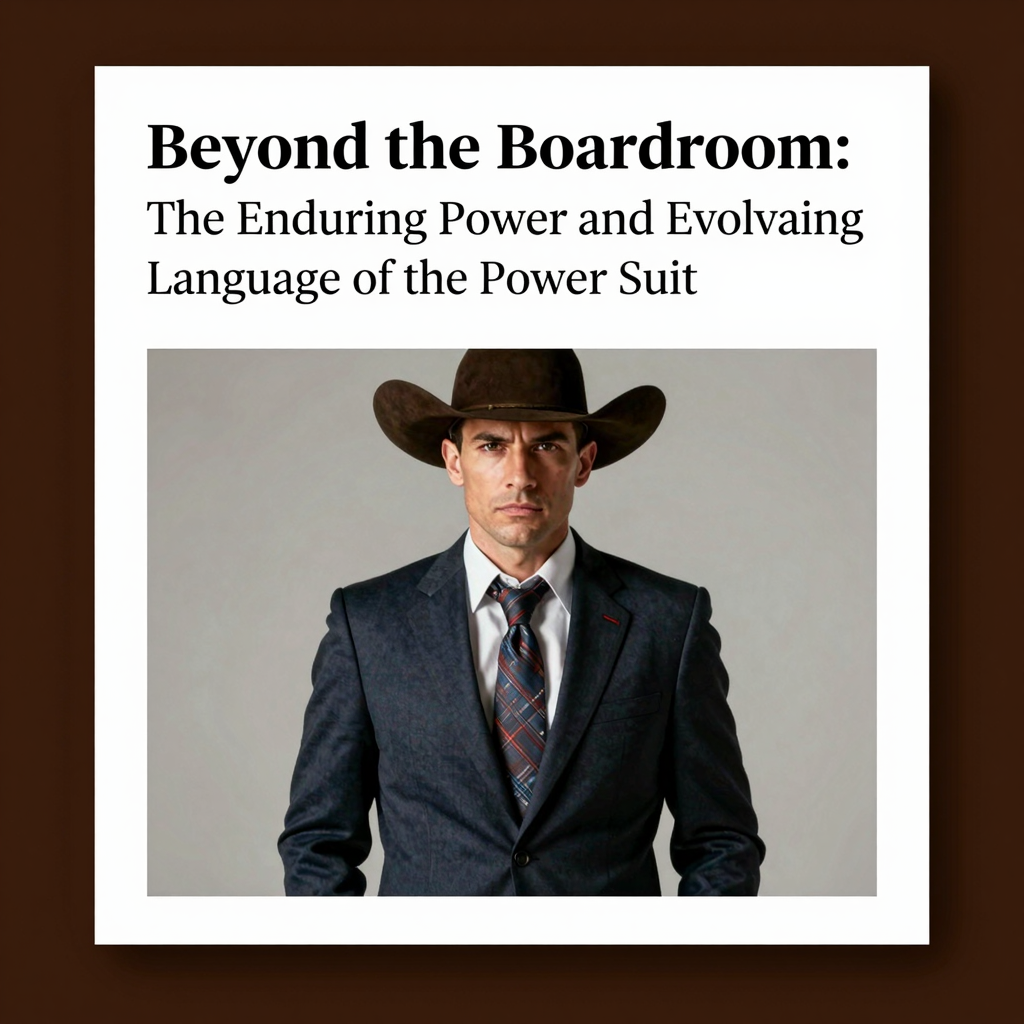
Beyond the Boardroom: The Enduring Power and Evolving Language of the Power Suit
 admin
admin
For decades, the phrase “power suit” conjured an immediate, uniform image: the sharp, structured, broad-shouldered silhouette of the 1980s, a sartorial suit of armor for women storming the male-dominated corporate bastions. It was a symbol of ambition, authority, and the desire to be taken seriously. But to confine the concept of the power suit to that single, iconic moment in fashion history is to misunderstand its profound and ongoing cultural significance. The power suit is not a relic; it is a living, breathing language. Its vocabulary has expanded, its grammar has loosened, and its meaning has deepened. Today, the true power of a suit lies not in mimicking a masculine ideal, but in its unparalleled ability to project confidence, articulate personal identity, and command respect on the wearer’s own terms.
From Armor to Arsenal: A Brief History of Suited Authority
The journey of the suit as a tool of power is intrinsically linked to social change. Its modern roots are, undeniably, masculine. Evolving from the court dress of the 17th century, the tailored suit became the standard uniform for men in business and politics by the 19th and 20th centuries, symbolizing rationality, professionalism, and social standing. For women, however, wearing trousers—let alone a full suit—was long considered transgressive. Pioneers like Marlene Dietrich in the 1930s and Katharine Hepburn in the 1940s challenged norms with their tailored trousers and jackets, but it was a form of rebellious glamour, not yet corporate code.
The seismic shift arrived with the women’s liberation movement of the 1960s and 70s. Yves Saint Laurent’s revolutionary “Le Smoking” tuxedo for women in 1966 offered a new template of androgynous elegance. But it was the 1980s that cemented the “power suit” in the popular lexicon. As more women entered high-level executive roles, designers like Thierry Mugler and Giorgio Armani, and pop culture figures like Joan Collins in Dynasty, provided the blueprint: imposing shoulder pads, nipped-in waists, knee-length skirts, and a palette of navy, black, red, and ivory. This was armor. It was a visual statement that said, “I am here, I am your equal, and I mean business.” It borrowed the established language of male authority to claim a seat at the table.
The Modern Power Suit: Redefining the Parameters of Power
The 21st-century power suit has undergone a quiet revolution. The rigid, uniform-like structure has given way to a philosophy centered on intentionality, authenticity, and personal power. The goal is no longer to blend into a masculine environment but to stand out with one’s unique authority. The modern power suit is an arsenal of options, not a single weapon.
The Elements of Contemporary Power Dressing
Today’s power suit is defined by its fit, fabric, color, and styling versatility.
- Fit is King (and Queen): The most critical element is impeccable tailoring. Whether it’s a relaxed, oversized blazer with a defined shoulder or a sharply-darted, waist-cinching jacket, it must fit you perfectly. Comfort is now recognized as a component of confidence; you can’t command a room if you’re constantly adjusting a too-tight jacket.
- The Fabric Tells a Story: Luxury fabrics like wool crepe, cashmere, and high-quality linen communicate sophistication. Technical fabrics with stretch offer ease and modernity. Velvet, silk, or subtly patterned jacquard can add a layer of distinctive personality.
- A New Color Palette: While navy and charcoal remain timeless, power now comes in a spectrum. Soft pastels, rich earth tones, vibrant emerald green, or even head-to-toe white can make a powerful, memorable statement. Color is used strategically to convey creativity, approachability, or boldness.
- Silhouette Liberation: The suit separates are as important as the full set. Wide-leg trousers, tailored shorts, cropped jackets, and sleek vests all form part of the modern suit lexicon. The matching set remains a potent tool, but mixing a bold blazer with jeans or a statement skirt is equally powerful.
Power Suiting for All: An Inclusive Evolution
Perhaps the most significant evolution is the democratization of the power suit. It is no longer exclusively for the C-suite or the lawyer in court. It is for the entrepreneur pitching to investors, the creative director leading a brainstorm, the speaker walking on stage, or anyone who wants to feel intentionally empowered for a significant life event—from a major presentation to a difficult conversation. Furthermore, the conversation has expanded beyond the gender binary. Designers and brands now create suits for all body types and gender expressions, reinforcing that power dressing is about self-affirmation, not conformity to an outdated ideal.
Wearing Your Power: Practical Styling for Maximum Impact
Understanding the theory is one thing; building your own power suit identity is another. The key is to start with a foundation piece that makes you feel unstoppable.
Building Your Foundation: Invest in one exceptional, well-tailored blazer in a neutral color that works with your wardrobe. This is your anchor. Pair it with everything from silk slip dresses to crisp white t-shirts. Next, find the trousers that make you feel both polished and comfortable—a straight-leg, a tailored wide-leg, or a perfect cropped style.
The Personal Touch: This is where your power truly shines. Your suit is the canvas; your accessories and styling are the art.
- Footwear: Swap predictable pumps for sleek loafers, architectural block heels, or even premium sneakers for a modern, dynamic feel.
- Topography: Ditch the stiff blouse. Try a simple tank, a fine-gauge knit, a graphic tee (for a creative field), or a bare neckline under an open jacket.
- Accessories: Meaningful jewelry—a single statement ring, layered necklaces, or bold earrings—adds personality. A unique bag or a great watch are functional power pieces.
The Mindset: Ultimately, the most important accessory is your posture and attitude. A power suit amplifies your innate confidence; it doesn’t create it from scratch. Wear it with the conviction that you belong in the room, that your ideas have value, and that your presence matters. The suit should make you feel like the best, most capable version of yourself.
Conclusion: Power as Self-Expression
The power suit has transcended its origins as corporate armor to become one of the most versatile tools of self-expression in modern dress. Its evolution from a uniform of assimilation to a platform for individuality mirrors broader societal shifts towards authenticity and inclusive definitions of success. The true “power” in today’s power suit is no longer about borrowing authority from an old system; it’s about generating your own. It’s the confidence that comes from knowing you are dressed with intention, the clarity that comes from not worrying about your clothes, and the statement that you respect the occasion and, more importantly, yourself. Whether you choose a classic pinstripe, a deconstructed linen set, or a boldly colored blazer paired with unexpected elements, remember: you are not just wearing a suit. You are authoring your own narrative of power, one tailored stitch at a time.
